Yorkville Condo Market: Trends And Drivers
January 15, 2026
January 15, 2026
Thinking about a Yorkville condo move and trying to read the tea leaves? You’re not alone. When every building has a reputation and every view changes value, it can be hard to know what really drives pricing and timing. In this guide, you’ll learn the key trends, the metrics that matter, and how to use micro-market insights to buy or list with confidence this spring. Let’s dive in.
Yorkville is one of Toronto’s most concentrated luxury nodes with a tight cluster of high-service buildings, concierge living, and design-forward suites. For analysis, focus on condominium apartments within the Yorkville area and adjacent corridors that offer premium finishes, 24-hour concierge, and robust amenity packages. Exclude purpose-built rentals.
“Luxury” is a moving target that should be defined by the top tier of local pricing. A practical approach is to look at the top 10 to 20 percent of recent Yorkville condo sales by price or price per square foot. Use MLS sales over the last 12 months for a clean read and be consistent about how unit size is measured when you calculate PPSF.
In Yorkville, a handful of transactions can swing headline averages because turnover is limited. Building brand, unit exposure, floor height, and renovation quality can move value more than neighbourhood-wide stats. That’s why you should pair neighbourhood metrics with building and unit-level comparisons before you set a price or make an offer.
When you analyze Yorkville’s luxury segment, focus on these measures over trailing 3, 6, and 12 months:
PPSF is your best apples-to-apples tool when suites vary in size and finish. Calculate PPSF as sale price divided by the unit’s recorded living area. Stay consistent about whether the source uses builder floor plans or measured area. Because PPSF often declines as floor plates get larger, compare within size bands, such as under 800 square feet, 800 to 1,200 square feet, and over 1,200 square feet.
Months of inventory is active listings divided by average monthly sales. It shows the balance between supply and demand. In a small, luxury-dense pocket like Yorkville, months of inventory can shift quickly when a few trophy listings hit the market. Track it monthly and note the transaction count so you understand volatility.
Days on market shows how quickly similar luxury suites are selling. Pair it with the list-to-sale price ratio to gauge typical negotiation room. High-demand units with skyline or park exposures, curated interiors, or rare terraces often sell faster and closer to asking than more common floor plans.
Carry costs matter, even at the luxury level. Report median condo fees and property taxes for your comparison set. Buyers will weigh amenities and services against fee levels. Sellers should be ready to show the value of their building’s amenity roster and management quality.
Yorkville demand is a blend of macro conditions and hyper-local lifestyle appeal.
Financing conditions shape confidence. Higher interest rates can cool activity by reducing purchasing power, while easing can accelerate demand. For broader context on rates, supply, and completions, review national housing insights from the Canada Mortgage and Housing Corporation and population trends from Statistics Canada. New supply and completion timing also influence the resale market, which is tracked by Urbanation.
Yorkville’s retail, galleries, dining, and museum access draw buyers who value walkable luxury and full-service living. Building brand and amenity quality command premiums, especially where concierge, spa-calibre fitness, and private dining spaces are done well.
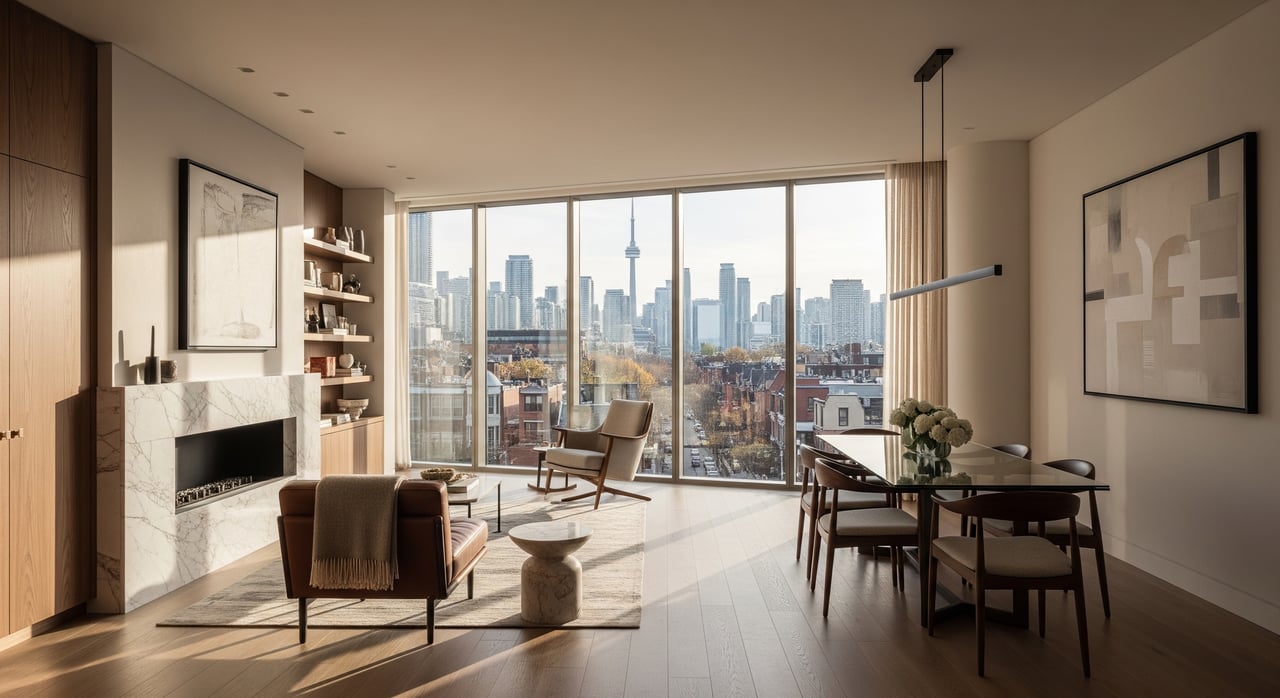
Unobstructed views and higher floors are scarce and valuable. Efficient layouts, corner exposures with great light, and large terraces can lift PPSF. Professionally designed interiors with integrated appliances and fine materials often shorten days on market.
Design-conscious end users, downsizers who want low-maintenance living with services, and buyers with flexible work patterns that require a home office are key groups. Their preferences have pricing implications for certain floor plans and exposures.
Spring is traditionally the most active listing season in Toronto. In Yorkville, that can mean more quality options and faster decision cycles on the best units. Sellers should evaluate the specific spring pipeline and any new launches nearby. Buyers should be prepared to move quickly on standout opportunities.
Smaller floor plates can show higher PPSF, but finishes and exposure still matter. Units with efficient layouts, natural light, and quiet outlooks will usually outperform similar-size units with awkward plans or obstructed views.
This is a sweet spot for many downsizers and design-forward end users. Premiums accrue to corner plans, split bedrooms, and suites with usable dens that function as offices. Expect stronger activity for move-in-ready units with curated interiors.
The trophy segment behaves differently due to very limited comparables. Floor height, skyline or park views, private outdoor space, and designer provenance can swing value significantly. Expect longer due diligence periods and a wider DOM range as buyers and sellers bridge expectations.
Pre-construction and recently completed luxury towers often trade at a different PPSF than resale, with distinct tax considerations. If you are evaluating assignments or new launches, track the new-build pipeline and incentives through sources like Urbanation. Pair that with broader Toronto market context from the Toronto Regional Real Estate Board to understand how new supply might influence resale pricing pressure.
Yorkville is a place where building identity, design details, and lifestyle storytelling shape results. If you want data-guided pricing and boutique, design-forward presentation for a listing, or you need a sharp eye on comps and finishes as a buyer, you deserve a specialist who lives this micro-market every day. To align timing, pricing, and presentation with your goals, connect with Shirel Shayo for a personalized Yorkville condo consultation.
Stay up to date on the latest real estate trends.
Whether you’re entering the market or preparing to sell, expect a calm, modern, and detail-driven experience shaped entirely around you.