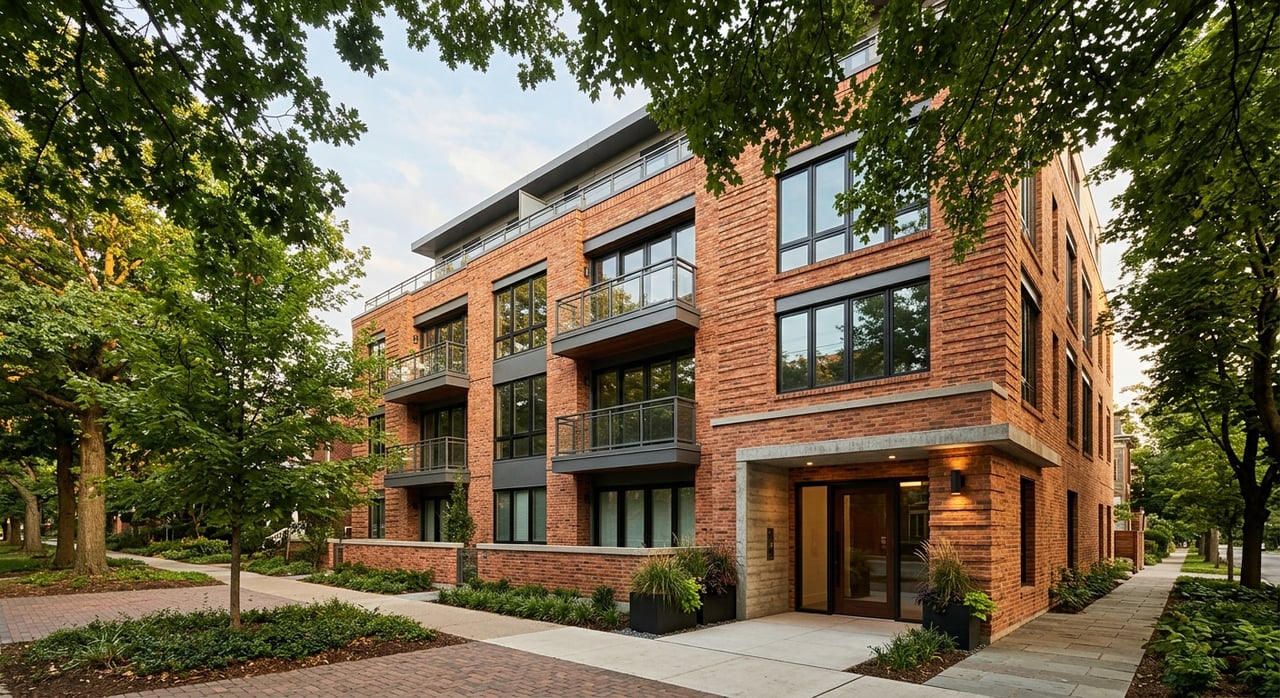
Your Guide to Annex Boutique Condo Buildings
July 2, 2026
July 2, 2026
If you are drawn to the Annex, chances are you are looking for more than a standard condo tower. You may want character, a more intimate building feel, and a home that reflects the neighborhood’s storied streetscape. This guide will help you understand what “boutique” can mean in the Annex, where the tradeoffs are, and what to review before you buy. Let’s dive in.
The Annex has a built form that naturally supports smaller-scale condo living. The City of Toronto’s West Annex heritage study describes the area as having a significant collection of low-rise late-19th- to early-20th-century house-form buildings, civic and institutional buildings, narrow streets, parks, and a mature tree canopy.
That setting helps explain why boutique condo buildings often feel especially at home here. In the Annex, condo living can feel tied to the street, the architecture, and the neighborhood rhythm in a way that is different from a typical downtown high-rise.
The heritage study also notes that one of Toronto’s first apartment buildings in the area dates to 1906, with later mid-rise and high-rise additions following municipal by-law restrictions that limited low-rise apartment construction. For buyers, that means the Annex offers a mix of old and new forms, from conversions and low-rises to amenity-rich mid-rises.
In Annex condo marketing, “boutique” is not a formal building category. It is used loosely, and it can describe everything from a six-unit townhouse conversion to a mid-rise with well under the scale of a major downtown tower.
Examples in the Annex span a wide range. Brunswick Court has 6 units, Audley Court has 8, The Annex on Brunswick has 11, 113 Dupont Lofts has 7, and School House Lofts has 19. On the larger side, St George Mews has 74 units, BStreets Condos has 195, and The Dunhill Club has 206.
What many of these buildings share is not one exact unit count. Instead, buyers are usually responding to a combination of scale, architectural character, and a more personal relationship to the street and surrounding blocks.
Many boutique-style Annex buildings stand out because they offer more visual personality than a typical glass tower. That can come from heritage architecture, a conversion history, loft-style volume, or details that make the home feel more curated and individual.
School House Lofts, for example, is a former Loretto College conversion with 19 suites, brick-clad character, and a contemporary twist. At 113 Dupont Lofts, the building’s past as a commercial office property shapes the experience, with only seven lofts, large open-concept suites, private terraces, and distinctive finishes.
Smaller resident counts often appeal to buyers who want a more private day-to-day experience. Fewer units can mean fewer people moving through the lobby, hallway, or shared spaces on a typical day.
That does not automatically make a building better. It simply creates a different living environment, one that can feel calmer and more contained than a larger shared community.
Boutique Annex buildings often feel more connected to the blocks around them. Many sit within tree-lined residential streets or adapted heritage settings rather than in a purely tower-driven skyline context.
Brunswick Court is a good example. It is a two-floor, six-unit townhouse conversion with a tree-lined setting, private driveway, backyard, balconies, and fireplaces, which creates a very different feel from a standard condo corridor.
One of the biggest differences between boutique buildings and larger condo properties is the amenity package. Smaller Annex buildings often offer a more restrained set of features in exchange for a quieter, more intimate scale.
Brunswick Court is a six-unit townhouse conversion with transit access, pet restriction, and a security system. Audley Court is self-managed and has a relatively simple amenity profile.
By comparison, some larger Annex buildings offer more services and shared spaces. School House Lofts includes an outdoor patio, party room, concierge, and storage. St George Mews adds a gym, rooftop deck, party room, meeting room, bike storage, and parking garage. The Dunhill Club includes concierge, rooftop deck, jacuzzi, meeting room, visitor parking, and a parking garage.
If amenities matter to your lifestyle, this is where your priorities need to be clear. If you value a concierge, fitness space, or rooftop experience, a larger “boutique-adjacent” building may suit you better than a very small conversion.
It is easy to assume a smaller building should have lower monthly fees, but that is not something you should assume. In Ontario, condo fees, also called common expenses, pay for operations and can include security, cleaning, and reserve fund contributions.
The Condominium Authority of Ontario notes that these fees may change over time and that a special assessment may be added if the corporation cannot cover its costs. The reserve fund is mandatory and is used for major repairs and replacements of common elements and assets.
Just as important, fee inclusions vary building by building. Audley Court includes common element, heat, hydro, building insurance, and water. Brunswick Court includes common element, building insurance, parking, and water. School House Lofts includes water, while 113 Dupont Lofts includes common element and water.
St George Mews and The Dunhill Club both include air conditioning, common element, heat, hydro, building insurance, parking, and water. The right comparison is not just the fee amount. It is what the fee covers, how the building is managed, and whether the reserve fund appears well supported.
Smaller buildings generally mean fewer neighbors and less foot traffic. Larger Annex buildings such as St George Mews, BStreets Condos, and The Dunhill Club create a busier shared environment with more residents and more formal services.
Neither option is inherently better. It comes down to whether you want a lower-traffic residential feel or a more active building with broader amenity support.
One major advantage of boutique Annex inventory is layout variety. Compared with a more standardized tower unit, these buildings can offer more distinctive floor plans and, in some cases, larger suite sizes.
Brunswick Court’s suites are 1,150 square feet each. School House Lofts ranges from 1,032 to 2,071 square feet, while 113 Dupont Lofts ranges from 2,237 to 4,365 square feet. By contrast, The Dunhill Club ranges from 418 to 1,212 square feet.
If your wish list includes volume, unusual layouts, or a less cookie-cutter floor plan, boutique Annex buildings are worth a close look. This is often where the neighborhood’s condo stock feels most design-forward.
Brunswick Court at 403 Brunswick Ave is a six-unit townhouse conversion with a highly intimate scale. Its private driveway, backyard, balconies, and fireplaces help it feel more like a tucked-away residential property than a conventional condo building.
Audley Court at 68 Kendal Ave is a four-storey, eight-unit self-managed building built in 1986. It offers a simpler amenity profile, and its maintenance fees cover common element, heat, hydro, building insurance, and water.
School House Lofts at 391 Brunswick Ave blends historic character with a more polished amenity offering. The 19-suite former school conversion includes an outdoor patio, party room, and concierge.
113 Dupont Lofts is one of the area’s most distinctive small-scale options. With only seven lofts, large open-concept suites, private terraces, and conversion character, it speaks to buyers who want space and individuality.
St George Mews at 284 Bloor St W is an 11-storey, 74-unit building across from the Bata Shoe Museum. It offers a separate gated laneway entrance along with a gym, rooftop deck, party room, meeting room, and parking garage.
The Dunhill Club at 95 Prince Arthur Ave is an eight-storey, 206-unit building with a landscaped private courtyard, rooftop terrace with hot tub area, lobby, amenity room, and 24-hour concierge. For buyers who want more services within the Annex context, it is an important option to compare.
BStreets Condos at 783 Bathurst St is a nine-storey, 195-unit mid-rise with concierge, gym, party room, and media room. It sits on the larger end of the “boutique” conversation and shows how flexible the term can be in this neighborhood.
Before buying a resale condo in Ontario, the Condominium Authority of Ontario recommends reviewing the status certificate. This document contains the corporation’s budget, a reserve fund statement, and legal information.
Condo corporations must provide it within 10 days of request and payment, and the fee can be up to $100. For a boutique building, this review is especially important because a smaller or conversion-style property can have a very different financial and operational profile from a larger tower.
Look beyond the monthly number. You want to understand whether the reserve fund appears aligned with the building’s repair and replacement needs and whether the fee structure makes sense for the property’s age, amenities, and common elements.
This matters in every condo purchase, but especially in smaller buildings where the cost structure may feel more concentrated. It is worth comparing what is included, what is excluded, and how the building plans for future work.
The Condominium Authority of Ontario also recommends reviewing the governing documents, restrictions, amenities, and any litigation. The documents may set out repair responsibilities and restrictions on smoking, short-term rentals, and pets.
In boutique buildings, these rules can differ materially from one property to another. That is particularly true in self-managed buildings or conversions, where the ownership structure and day-to-day expectations may feel more specific.
For pre-construction or recently converted product, the Condominium Authority of Ontario advises buyers to research the builder and review the disclosure package and warranty information. If you are considering a newer boutique project or a recent conversion, this step should be part of your process early on.
A boutique Annex condo can be a strong fit if you value design, scale, and neighborhood character over a long list of tower-style amenities. It can also be a smart choice if you want a home that feels more individual and less standardized.
At the same time, the best purchase usually comes from matching the building to your daily routine. If you want concierge service, a gym, and broader amenity support, a larger Annex building may give you a better balance. If you want privacy, quieter common areas, and more architectural personality, a smaller building may be the better match.
The key is not to buy the label. Buy the lifestyle, the layout, and the building profile that truly fits how you want to live in the Annex.
If you are comparing Annex condo buildings and want a more design-conscious, street-level perspective on what fits your lifestyle, Shirel Shayo can help you narrow the options with a personalized condo consultation.
Stay up to date on the latest real estate trends.
Whether you’re entering the market or preparing to sell, expect a calm, modern, and detail-driven experience shaped entirely around you.