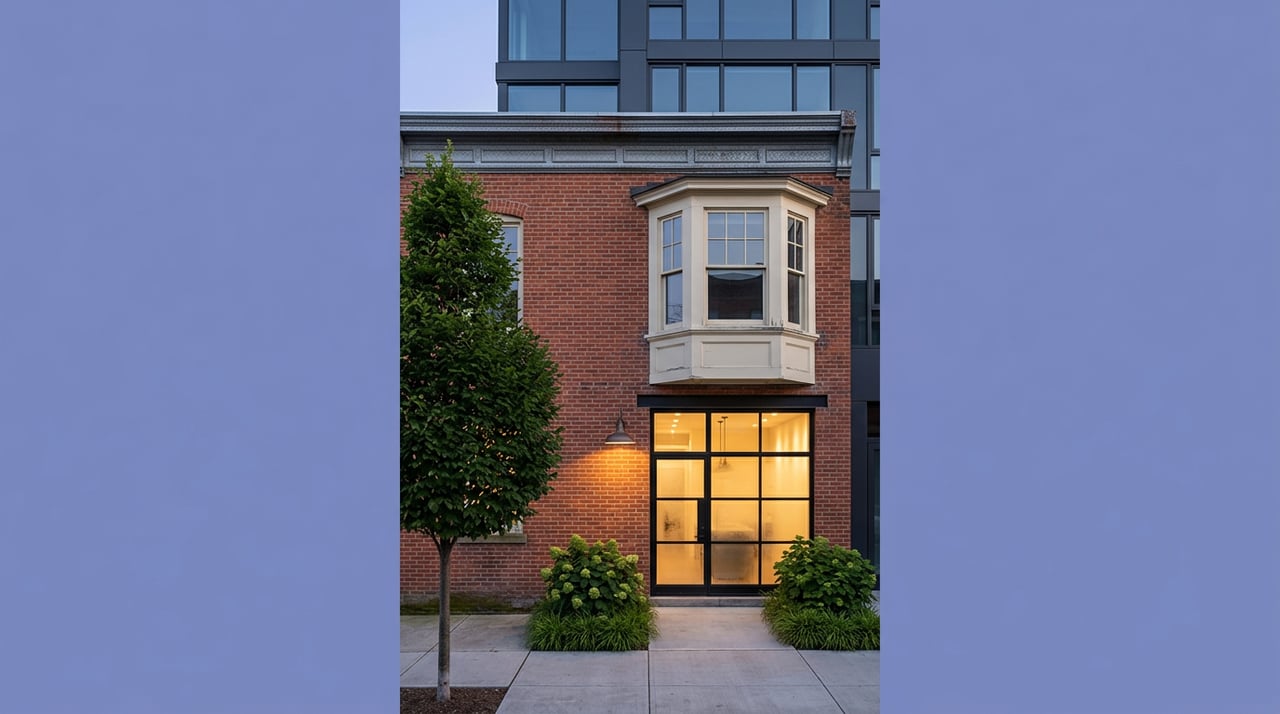
Mirvish Village Is Finally Open. Half of It Still Isn't.
September 17, 2026
September 17, 2026
Walk south from Bloor and Bathurst on a Saturday afternoon and you'll find a line for pizza, a bar full of people flipping through paperbacks with a drink in hand, and a park where kids are climbing over a bird bath shaped like a fountain. It looks finished. It looks like the Mirvish Village renderings that circulated for the better part of a decade finally became a real place.
Then you notice the paper still taped inside half the storefront windows.
Peterson, the developer that took over the project from Westbank, told CBC News that only 48 of the site's 106 commercial spaces are currently leased. That is the number underneath the ribbon cuttings, and it changes how you should read everything else that opened this year.
The Annex has waited nearly a decade for Markham Street to stop being a construction fence, and this year it finally handed over a few real destinations.
Storfer has said the path to opening Book Bar took longer than she and Freeman expected. Getting the keys, in her words, took far longer than expected, but the pair never considered walking away from the space or its history. That patience says something about the site generally. Nothing here moved fast, and the businesses that made it through are the ones willing to wait years for a corner that hadn't proven itself yet.
Here is the part that doesn't show up in the photos of the new park or the line outside Badiali. Less than half of the commercial square footage on this site has a tenant in it. And one of the anchors that was supposed to fill that gap already fell through: Asian grocer Bestco Fresh Foods was slated to move in, but its lease was terminated after the company reportedly missed rental payments. Peterson says a replacement grocery tenant will be announced.
Peterson also told reporters the project's construction is expected to be fully complete this fall. That timeline matters if you live nearby and have been mentally filing Mirvish Village under "done." It isn't. What opened this spring and summer is the first wave, not the finished floor plan.
That gap between what's open and what's leased isn't unique to this project, and it isn't necessarily a warning sign. It's a symptom of what happens when a development this size tries to fill 200,000 square feet of commercial space in a retail market where independent operators are stretched thin on rent everywhere in the city, not just here.
Avi Behar, whose firm The Behar Group Realty is handling commercial leasing and curation for the site, has been explicit that the slow fill isn't an accident. The curation of Mirvish Village, he's said, was built around a deliberate focus on local, independent, first-to-market operators rather than the national chains that can sign a lease fast and fill a storefront overnight. Book Bar, he's noted, is a concept that has found traction in gateway cities internationally but hasn't existed in Canada before. That's the kind of tenant this leasing strategy is built to attract, and that kind of tenant takes longer to find and longer to build out than a bank branch.
The clearest proof of that approach is Honest Ed's Alley, the narrow pedestrian laneway threading through the interior of the site between Markham and Bathurst. It's built as an incubator: 25 micro-retail units, most under 400 square feet, offered without the corporate covenant or long-term lease commitment that a conventional storefront would require. Early names attached to the space include Unruly Smoothie and Batch Cookies. The format exists specifically so a first-time operator without deep pockets can test a concept in a high-visibility spot without betting the business on a five-year lease.
The alley is set to open this month. That's worth marking on a calendar if you live in the Annex, because it's the piece of the project most likely to feel different every time you walk through it. Short leases mean faster turnover. A vendor that's there in October might not be there in the spring, and a stall that's empty this week might have a line by December. That's the tradeoff of the incubator model: it's more alive, but it's less permanent than a Markham Street storefront with a ten-year lease behind it.
What the alley's opening does not change is the broader vacancy picture. Fifty-eight storefronts across the rest of the development still need tenants, and a fall completion date for construction doesn't mean a fall completion date for leasing. If you're expecting every window on Markham Street to have a business behind it by Thanksgiving, the numbers don't support that yet.
Part of why operators are betting on this corner despite the slow fill is the math around it. The 200,000 square feet of commercial space sits inside roughly a one-kilometre trade area with an estimated 33,500 residents, and the University of Toronto is under a ten-minute walk away. That's the audience Behar and his team are leasing to, and it's a big enough one that betting on a first-to-market concept here makes more sense than it might somewhere with a thinner population base.
For residents, the practical read is simple. Treat this fall as the first real chapter of Mirvish Village, not the finished book. Go get a slice at Badiali, grab a drink at Book Bar, let your kids run around Ed Mirvish Park. Walk through Honest Ed's Alley when it opens this month and expect the vendor list to look different by next spring. But don't assume the empty storefronts you pass on the way there are a sign something went wrong. They're the slower half of a leasing strategy that was built, on purpose, to move at the speed of independent businesses instead of national chains.
If you're weighing what a home near this stretch of the Annex actually gives you right now versus what it will give you in a year, that distinction is worth having clear before you make a decision either way. You can read more about the neighborhood, its architecture, and what's changed recently on Shirel Shayo's Annex guide, or reach out directly for a conversation about what's actually happening on the ground here.
Stay up to date on the latest real estate trends.
Whether you’re entering the market or preparing to sell, expect a calm, modern, and detail-driven experience shaped entirely around you.