Forest Hill Got Its Subway Station. The Condo Premium Never Showed Up.
September 3, 2026
September 3, 2026
Line 5, the Eglinton Crosstown, opened in February 2026, and Forest Hill got a stop built directly into the lobby of a condo tower at Eglinton and Bathurst. If you have absorbed the standard real estate logic that a new transit line lifts everything within walking distance, you would expect this corner of Forest Hill to be showing it by late summer. The citywide condo numbers from the same stretch of 2026 tell a more complicated story, and the gap between the two is exactly what a buyer comparing Forest Hill to other midtown addresses needs to understand before assuming the station is a price signal.
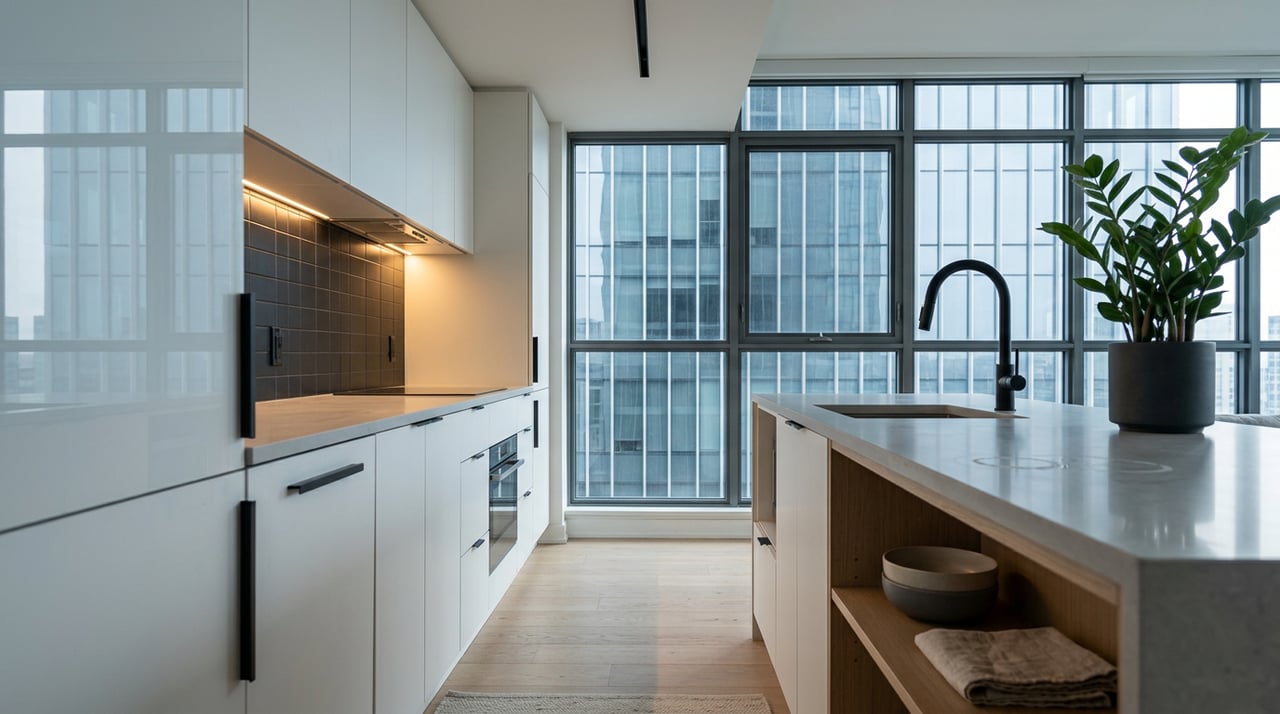
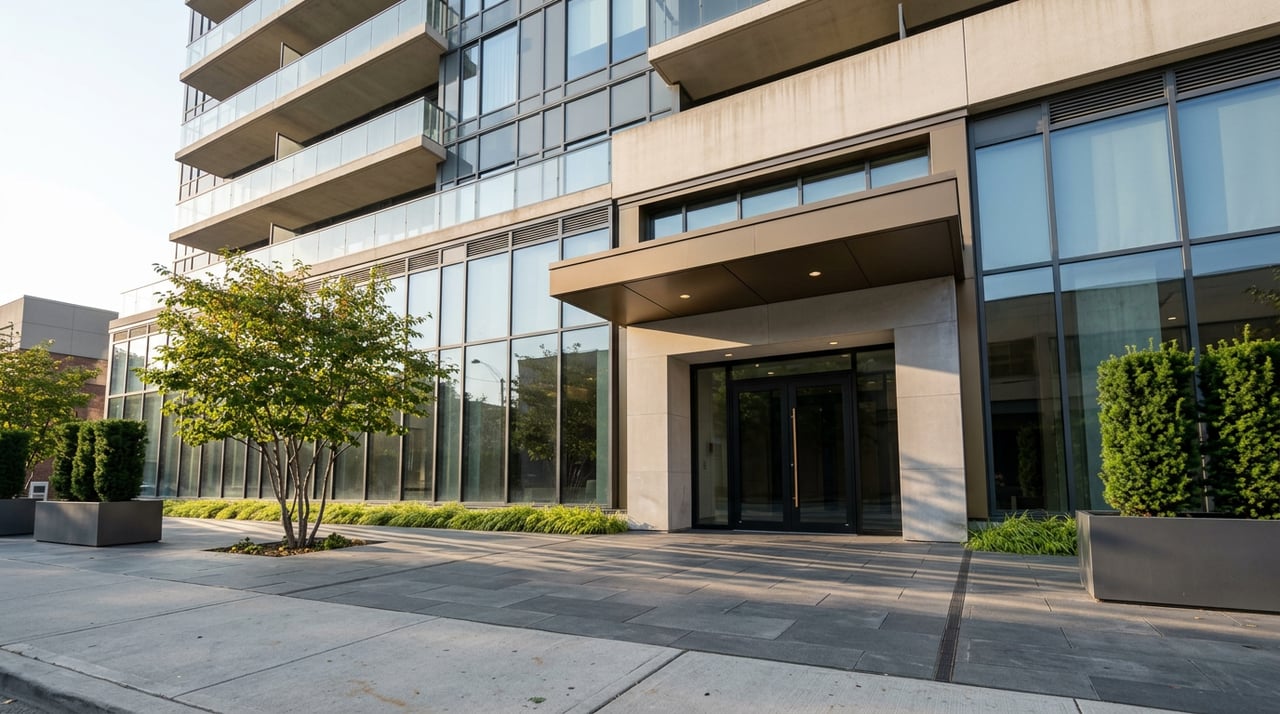
Start with the building itself. CentreCourt's project at 859 Eglinton Avenue West, marketed simply as The Forest Hill, was designed with an entrance connecting straight into what is now Forest Hill Station. According to CentreCourt's own account of the project, the building sits within roughly the top one percent of Greater Toronto Area condos with a direct lobby-to-subway connection, a genuinely rare feature that developers spent years using to justify the pricing. The lobby was fitted out with Armani furnishings, and the building was pitched as a mix of studios through three-bedroom suites meant to appeal to everyone from empty-nesters to students riding a brand-new line straight downtown.
That pitch is also where the timing problem starts.
Early marketing for The Forest Hill anticipated the Crosstown finishing construction around 2021 and the building reaching occupancy near 2023. The actual opening came in February 2026, close to five years later than the original transit timeline the building was sold against. That gap matters because it is not just a construction delay story. It is a supply story. Every year the line's opening slipped, more time existed for competing towers to get entitled, financed, and built along the same Eglinton corridor, all marketed on the same promise: a subway stop that, for years, existed only on a rendering.
By the time the station actually opened, the scarcity that justified the original premium had already been diluted by the corridor's own construction pipeline. A station that was supposed to be a rare amenity for one building became, five years later, one more feature among several new towers competing for the same buyers along the same half-kilometre of Eglinton Avenue West.
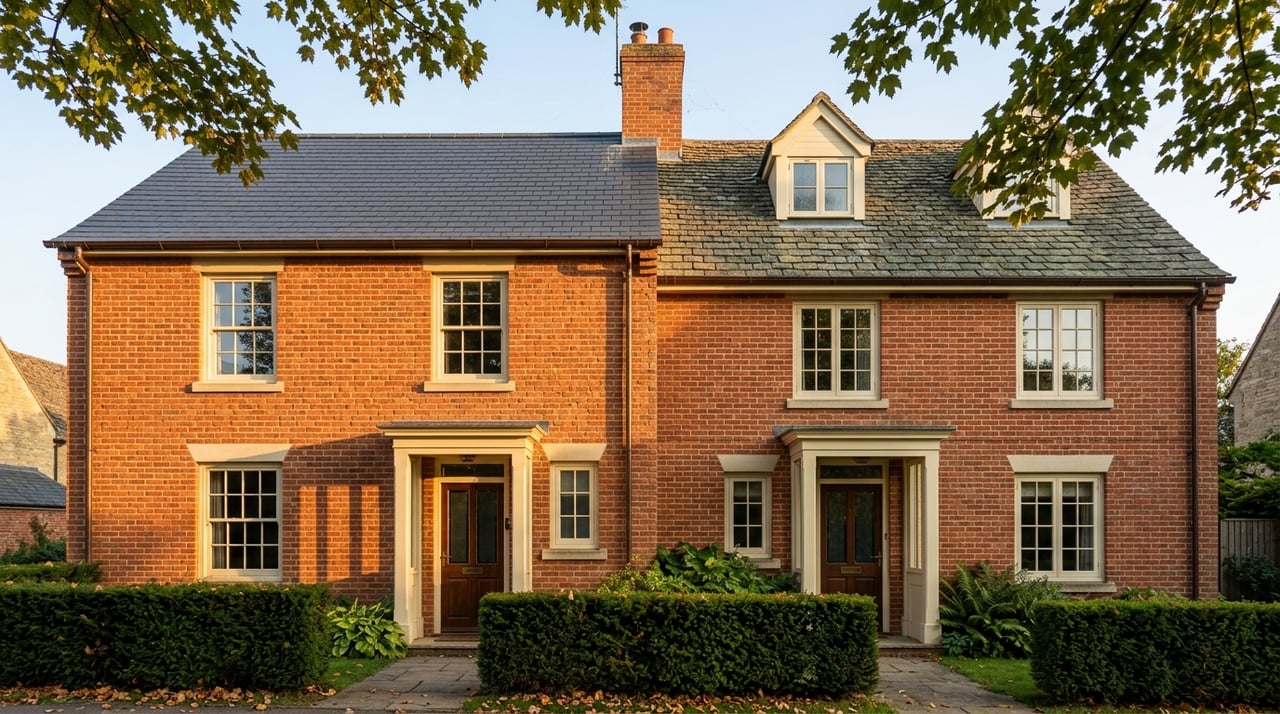
Anyone picturing Forest Hill from its reputation is picturing the wrong stretch of it. The estate streets closer to St. Clair, the ones with the mature tree canopy and the grand, quiet lots that give Forest Hill its name in real estate conversation, are a different housing market entirely from the Eglinton and Bathurst corridor where the new station sits, several blocks north. Walk that corridor and the streetscape is rental apartment buildings interspersed with new condo towers, a stretch built for density rather than the estate lot pattern that defines the neighborhood's luxury identity a few blocks south.
That split showed up in a single week of local news this August. On August 26, 2026, Sotheby's International Realty Canada announced the highest residential sale in Forest Hill South's history and the highest sale in the City of Toronto in close to five years, a property listed at 22 million dollars that closed at 23.5 million after three competing offers. Broker Jane Zhang represented the sale, and Ken Mazurek, the firm's Managing Broker in Toronto, described demand for single family homes in prestigious, school-adjacent neighborhoods as remarkably resilient even as broader housing market conditions had tightened over the summer.
That is a real number, and it is real evidence that the estate market in Forest Hill South is not softening. It tells you nothing about a condo well north at Eglinton and Bathurst. Different submarket, different buyer, different supply curve. Folding both into a single "Forest Hill is hot" headline is exactly the kind of shortcut that gets a buyer the wrong expectation walking into a condo showing.
A record house sale in Forest Hill South and a soft condo corridor at Eglinton and Bathurst are not contradictory data points. They are two different markets that happen to share a name.
Toronto's condo apartment segment gives useful context for reading the Forest Hill corridor specifically, and the numbers are not a straightforward tightening story. In the first quarter of 2026, the average GTA condo apartment sold for $618,484, down 9.1 percent from $680,243 a year earlier. The City of Toronto average came in at $649,330, above the GTA figure but itself down from $711,258 in the first quarter of 2025. New condo listings entering the market fell 19.4 percent year over year in that same quarter, while sales dropped 11.3 percent, a sign that buyers pulled back roughly as much as sellers did.
By the second quarter of 2026, months of inventory for condo apartments had fallen to 5, down from 7 a year earlier, which on its face reads like a tightening market. But the median days on market for sold condo units actually ticked up slightly, to 30 days from 29 the year before. Fewer competing listings did not translate into faster sales. That combination, tighter inventory alongside flat-to-slower absorption, describes a market working through a large overhang rather than one where demand has decisively returned.
Layer the Eglinton corridor's own supply history on top of that citywide picture and the local math gets less favorable, not more. A stretch of Eglinton that spent five years accumulating pre-construction announcements tied to a delayed subway line is arriving at completion during a quarter when the city's own condo segment is still working off inventory built up over the past year, not one where a new listing gets multiple competing offers on principle.
For a buyer weighing a Forest Hill condo against comparable product in the Annex or Yorkville, the transit connection at Eglinton and Bathurst is a genuine amenity and a legitimate long-term advantage. It is not, on its own, a price catalyst in the near term, because the corridor's supply pipeline was built during the same years the station was delayed, and that supply is landing into a citywide condo market still absorbing excess choice rather than a scarce one.
The practical read for anyone shopping this specific stretch: use the transit connection to evaluate long-term livability and resale durability, not to justify paying a premium today that assumes the station alone will move pricing. Compare the actual building specifics, unit mix, and current asking prices against other new construction along the corridor before assuming any one address has pulled ahead. For a fuller sense of what different Forest Hill condo buildings currently offer in amenities and price, see how the neighborhood's condo inventory breaks down building by building.
For an investor weighing purchase against lease-up in this corridor, the rental side of the citywide data is worth knowing too. The average one-bedroom apartment rent across the GTA came in at $2,246 in the first quarter of 2026, down 4.1 percent year over year, while condo apartment rental transactions actually rose to 16,365 across the GTA in that quarter, up from 14,793 a year earlier. The City of Toronto accounted for roughly 70 percent of those leases. That is a market with more tenant choice and softer asking rents, which shapes the near-term cash flow math for anyone buying into this corridor as a rental play rather than a primary residence.
Does a new subway stop automatically raise a Forest Hill condo's resale value? Not automatically, and not immediately in this corridor. The station itself is a genuine long-term asset, but the years between its original promised opening and its actual February 2026 opening allowed competing supply to catch up to the scarcity the original marketing was selling.
Is the Eglinton and Bathurst corridor the same market as Forest Hill Village? No. Forest Hill Village, centered on Spadina Road and Lonsdale, is the low-rise, boutique-shop core several blocks south. The Eglinton corridor is a denser, apartment-and-tower stretch with a different buyer profile and a different supply history.
What does the current rental data mean for someone buying here as an investment rather than a residence? It means more competition for tenants and softer asking rents than a year ago, which is worth building into any cash flow projection before assuming a unit near the new station will lease at a premium simply because of its transit access.
If you're trying to figure out where a specific Forest Hill address actually sits relative to the estate market to the south, the rental data downtown, or comparable new construction elsewhere in midtown, that is exactly the kind of building-by-building and corridor-by-corridor read Shirel Shayo works through with clients before they write an offer. Reach out for a personalized read on how a specific Forest Hill listing compares to what else is currently available across the city's other condo corridors.
Stay up to date on the latest real estate trends.
Whether you’re entering the market or preparing to sell, expect a calm, modern, and detail-driven experience shaped entirely around you.