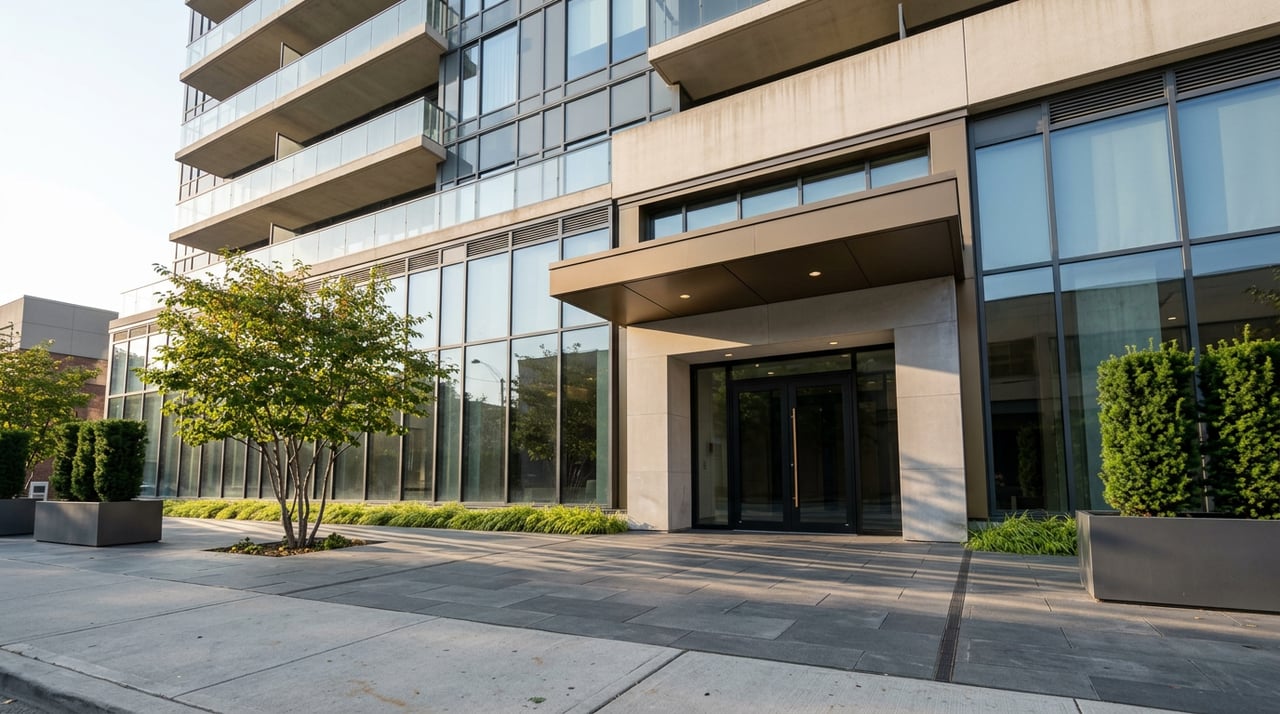
The Vacant Home Tax Bill That Can Follow a Yorkville Condo to Its New Owner
September 10, 2026
September 10, 2026
A buyer closes on a Yorkville condo in good faith. The unit is exactly what they wanted: a boutique building, a quiet street off Bay, a seller who seemed straightforward. Weeks later, a notice arrives from the City of Toronto. The previous owner never filed a Vacant Home Tax declaration for two years running. The unpaid tax, now a lien against the title, totals more than $50,000. It belongs to the new owner now, not the person who sold it to them.
That scenario is not a hypothetical scare tactic. It is a documented outcome under Toronto's Vacant Home Tax program, and it lands hardest in exactly the kind of building stock Yorkville is known for: high-value units, part-time occupancy, and a meaningful share of investor ownership. If you own a condo here, are buying one, or are weighing whether to list a unit as a rental this fall, the mechanics below are worth twenty minutes before you sign anything.
Toronto's Vacant Home Tax charges 3% of a property's Current Value Assessment on any residential unit that sits unoccupied for more than six months in a calendar year. That rate has been in effect since the 2024 taxation year, up from the 1% the city charged when the program launched in 2022. Every residential owner in Toronto, whether the property sits empty or someone lives there full time, has to file an occupancy declaration each year by April 30 or the city automatically assumes the unit was vacant.
For 2025 occupancy, the resulting bills are due right now. The City of Toronto has the payment split into three installments this year: September 15, October 15, and November 16, 2026. There is no grace period built into the process, and missing the underlying April declaration triggers the deemed-vacant classification with no further warning before the bill arrives.
On a $1,000,000 assessed value, a full year of vacancy works out to a $30,000 tax bill. Assessed value in Toronto is not the same as market value. The city's Municipal Property Assessment Corporation figures are frozen at January 1, 2016 levels and won't be updated for the 2026 tax year, which means the CVA used to calculate the tax typically sits well below what a Yorkville unit would actually sell for today. Even with that lag working in an owner's favor, a boutique building on Yorkville Avenue or a suite in a tower like One Bloor still carries an assessed value high enough that 3% is not a rounding error.
The Vacant Home Tax was built to catch pieds-à-terre sitting dark for most of the year. That was the original story in 2022. The risk in 2026 looks different, and it traces back to what has happened to the rental market underneath it.
Toronto's condo rental market has softened considerably over the past two years. As of January 2026, the average unfurnished one-bedroom condo rent in the city had fallen to $1,993 a month, down $156 year over year, while the purpose-built apartment vacancy rate hit 3% for the first time since the pandemic. In the first quarter of 2026, rental listings across the GTA condo market grew faster than rental transactions, and a growing number of owners who can't sell at their preferred price without realizing a loss are choosing to rent instead, which adds even more competing supply.
That combination matters for anyone who owns an investor unit and needs to place a tenant. A softer market with more competing listings means longer vacancies between leases. A unit that used to re-rent within a few weeks in 2021 might now sit empty for two, three, or four months while a landlord finds the right tenant. That gap used to be a rent-loss problem. Now it is also a tax-compliance problem, because the city's own guidance describes exactly this pattern as a common trigger: a tenant moves out mid-year, the unit stays empty through the rest of the year while the owner searches for a replacement, and the landlord only discovers the shortfall against the six-month threshold when the assessment arrives. There is no exemption category for "actively searching for a tenant." The only defense is documentation of active rental efforts, and that only helps if the total occupied time still clears six months.
There is a second layer of confusion worth clearing up directly, because it circulates in exactly the kind of owner conversations that happen in a neighborhood like Yorkville with meaningful international ownership. The federal Underused Housing Tax, a separate 1% levy that applied mainly to non-Canadian owners of vacant or underused property, was ended by Bill C-15 when it received Royal Assent on March 26, 2026. Filing and payment obligations for the 2022, 2023, and 2024 calendar years were not forgiven by that repeal, but the tax itself no longer applies for 2025 and beyond.
None of that touches Toronto's municipal Vacant Home Tax. The two were always separate regimes with separate portals, separate rates, and separate governing authorities, and the VHT remains fully active regardless of what happened federally. An owner who assumes the UHT repeal means they are done with vacancy taxes altogether is the exact profile the city's audit program is now built to catch.
| Toronto Vacant Home Tax (VHT) | Federal Underused Housing Tax (UHT) | |
|---|---|---|
| Status in 2026 | Fully active | Ended for 2025 and later years |
| Rate | 3% of Current Value Assessment | 1% of assessed value (while active) |
| Who it applied to | All Toronto residential owners | Mainly non-Canadian owners |
| Governing body | City of Toronto | Government of Canada |
| Outstanding 2022–2024 obligations | Not applicable, ongoing program | Still owed, not forgiven |
The city confirmed in 2026 that it now has authority to audit declarations filed for the 2023 and 2024 tax years, alongside expanded data cross-referencing to flag inconsistencies. Properties get selected for review based partly on value, which puts higher-priced Yorkville units in a naturally higher-scrutiny bracket than the citywide average. An owner who filed a renovation exemption without a building permit on record, or who claimed occupancy without a lease or utility records to back it up, is the kind of file that surfaces first.
That backward reach is also why the closing-day scenario at the top of this piece keeps happening. A buyer who skips a title search focused specifically on VHT liens is trusting that the seller's paperwork was clean for years they had no way of verifying. It is the same logic as checking a condo's status certificate before waiving a financing condition. The tax lien attaches to the property, not the person, and it survives the sale unless someone catches it first.
If you're selling, get your VHT declarations current before your unit goes to market. A buyer's lawyer conducting proper due diligence will find an unfiled declaration, and it becomes a negotiating point at exactly the moment you have the least leverage.
If you're buying, ask your lawyer to confirm VHT status as part of the title search, not as an afterthought after waiver of conditions. This is a five-minute check against a five-figure risk.
If you own a rental unit and a tenant is giving notice, start the re-lease process immediately and keep a paper trail. Lease agreements, listing dates, and showing records are the evidence the city asks for if a gap between tenants pushes your occupied time close to the six-month line.
Does buying a Yorkville condo and not moving in right away trigger the tax? Generally no, as long as your total occupancy for the calendar year clears six months. A closing in the spring followed by a summer renovation and a fall move-in typically still qualifies for the principal residence exemption, provided the declaration gets filed.
What if I use my Yorkville unit part time and split residence elsewhere? Seasonal or occasional use can fall short of the six-month occupancy threshold on its own. Review the exemption categories carefully, because a court order, medical necessity, or an active renovation with a permit on file are treated differently than simple part-time use.
I closed on a resale unit. Am I responsible for the seller's unpaid VHT? It depends on when the closing occurred relative to the declaration deadline and whether the lien was already registered. This is precisely the reason to have a lawyer confirm VHT status before waiving conditions rather than after the deal has closed.
None of this replaces advice from a real estate lawyer or accountant, and every declaration, exemption, and audit outcome depends on facts specific to your unit and your ownership history. What a buyer's agent or listing agent can do is flag the risk early enough that it gets handled with a phone call instead of a five-figure surprise.
If you're weighing a Yorkville purchase, preparing to list an investor-owned unit, or simply want a second set of eyes on where your building sits in this market, Shirel Shayo works these transactions daily and can walk through what your specific situation looks like before you commit to anything.
Stay up to date on the latest real estate trends.
Whether you’re entering the market or preparing to sell, expect a calm, modern, and detail-driven experience shaped entirely around you.